
Impact Matters Most When Communities Can Understand It
In health development, the science is rarely the problem. The programmes are well designed, the evidence is strong, and the funding is committed. What often gets lost is the last mile: whether the people the work is meant for actually hear it, trust it, and act on it.
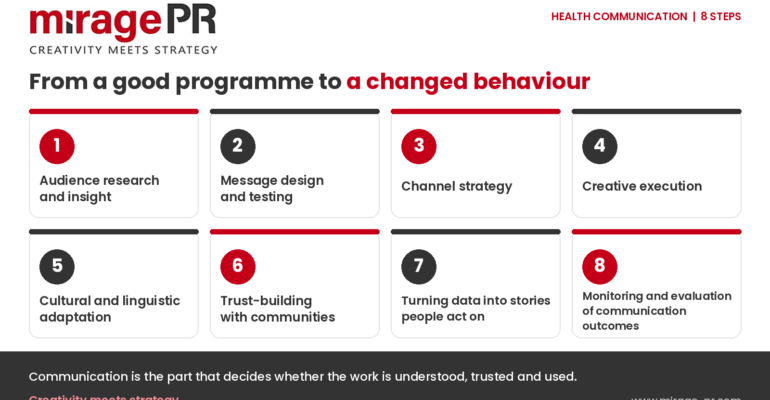
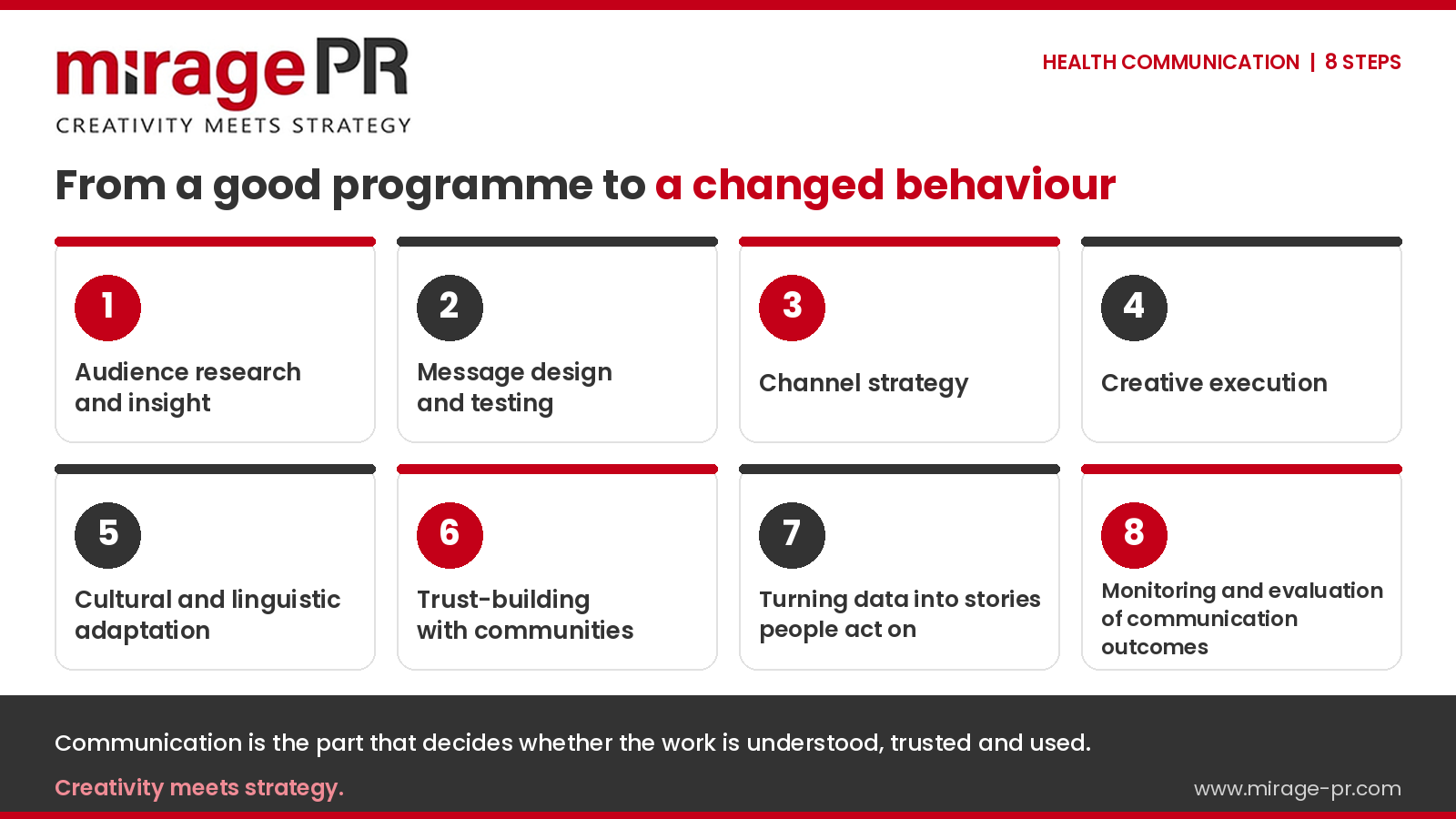
That is where a communications agency does something no report can. At Mirage PR, we see communication as the part of development work that decides whether it is understood, trusted and used. Here are the eight steps we follow to close the gap between a good programme and a changed behaviour.
1. Audience research and insight
We start with the people, not the message. Who are they? What do they already believe? Who do they listen to? What stops them from acting? Good research replaces assumptions with answers, and it shapes every decision that follows.
2. Message design and testing
Technical findings rarely work as they are written. We turn them into plain, memorable messages, then test them with real audiences before any production begins. A message that has been tested is far less likely to be misunderstood.
3. Channel strategy
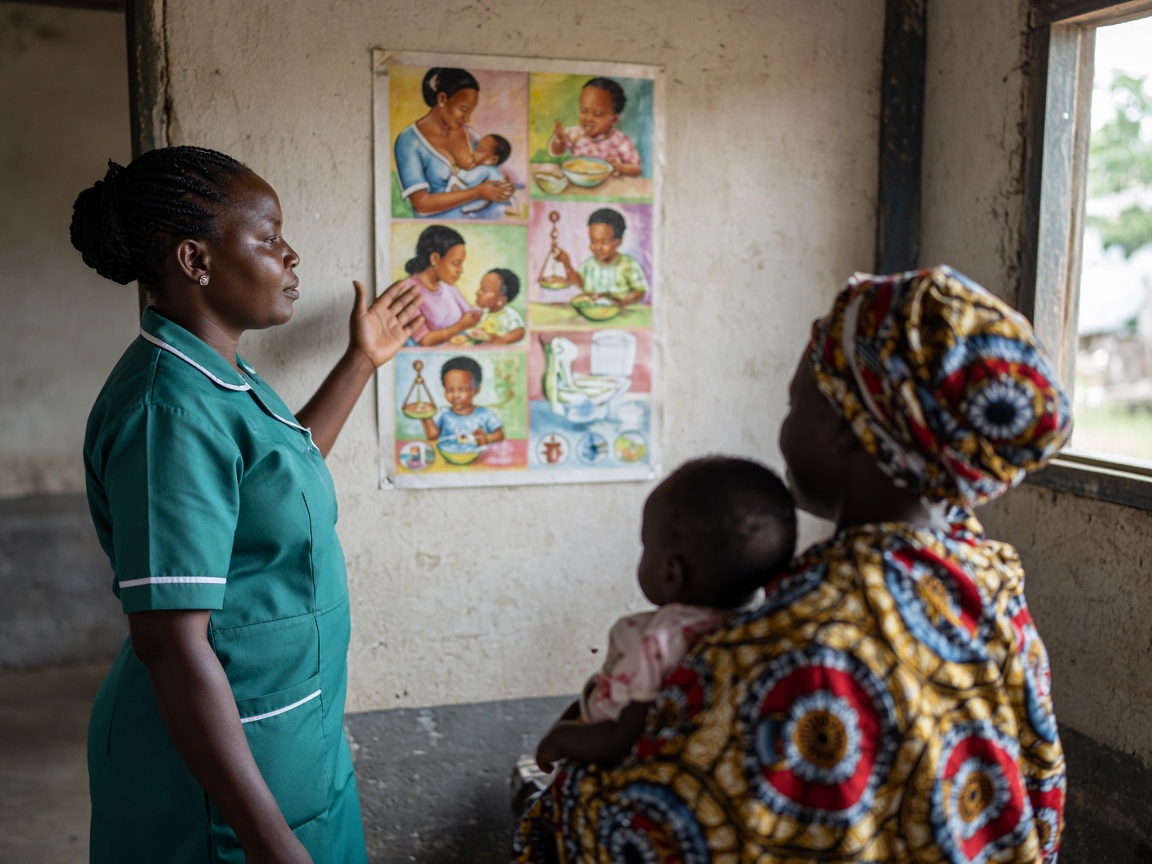
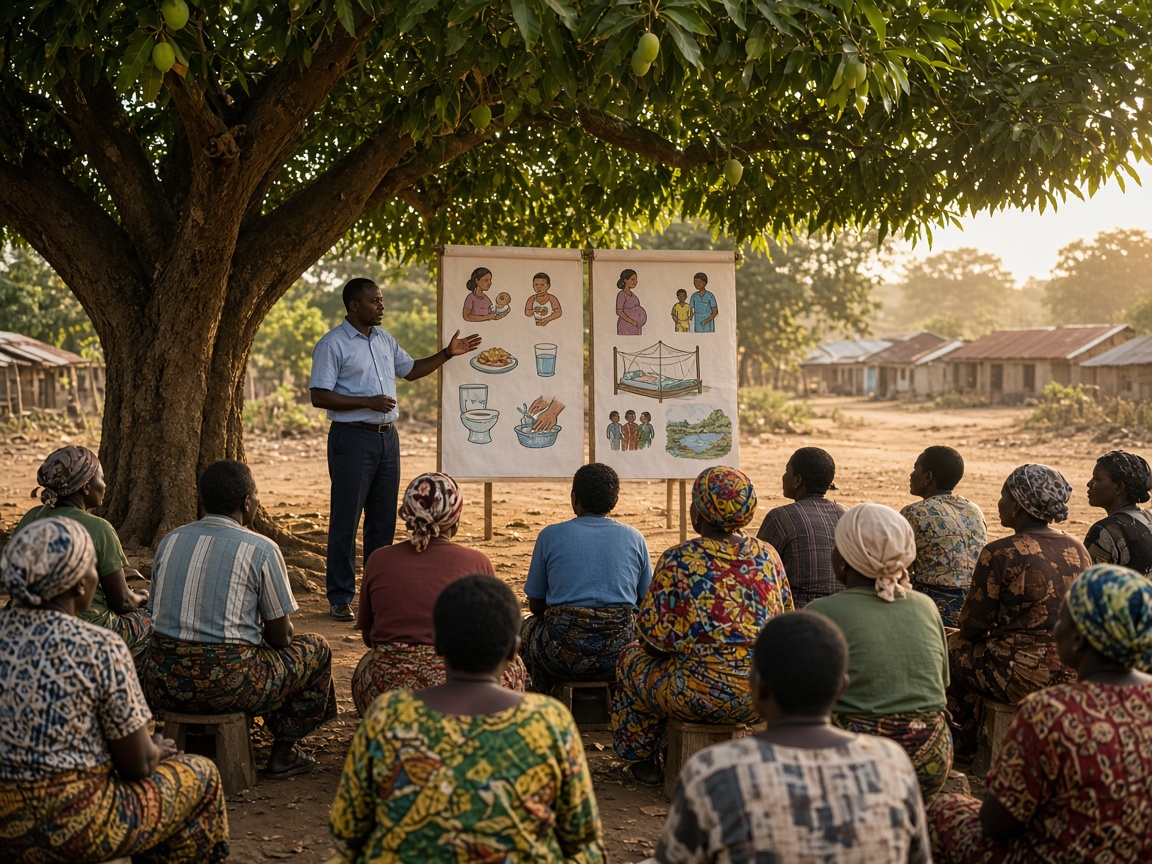
A clinic wall, a community radio slot, a village meeting, a WhatsApp group and a LinkedIn post each do a different job. We match the channel to the audience and the moment, so the right message reaches the right person in the place they are most likely to pay attention.
4. Creative execution
Strong ideas, clear visuals and good storytelling are what make people stop, understand and remember. Creativity is how a message earns attention, and in a crowded information space, attention is the first thing a programme has to win.
5. Cultural and linguistic adaptation
Translation is not enough. Language, imagery, tone and context have to feel like they belong to the community, in Chichewa, Tumbuka or whichever language people actually think in. A message that sounds foreign is easy to ignore.
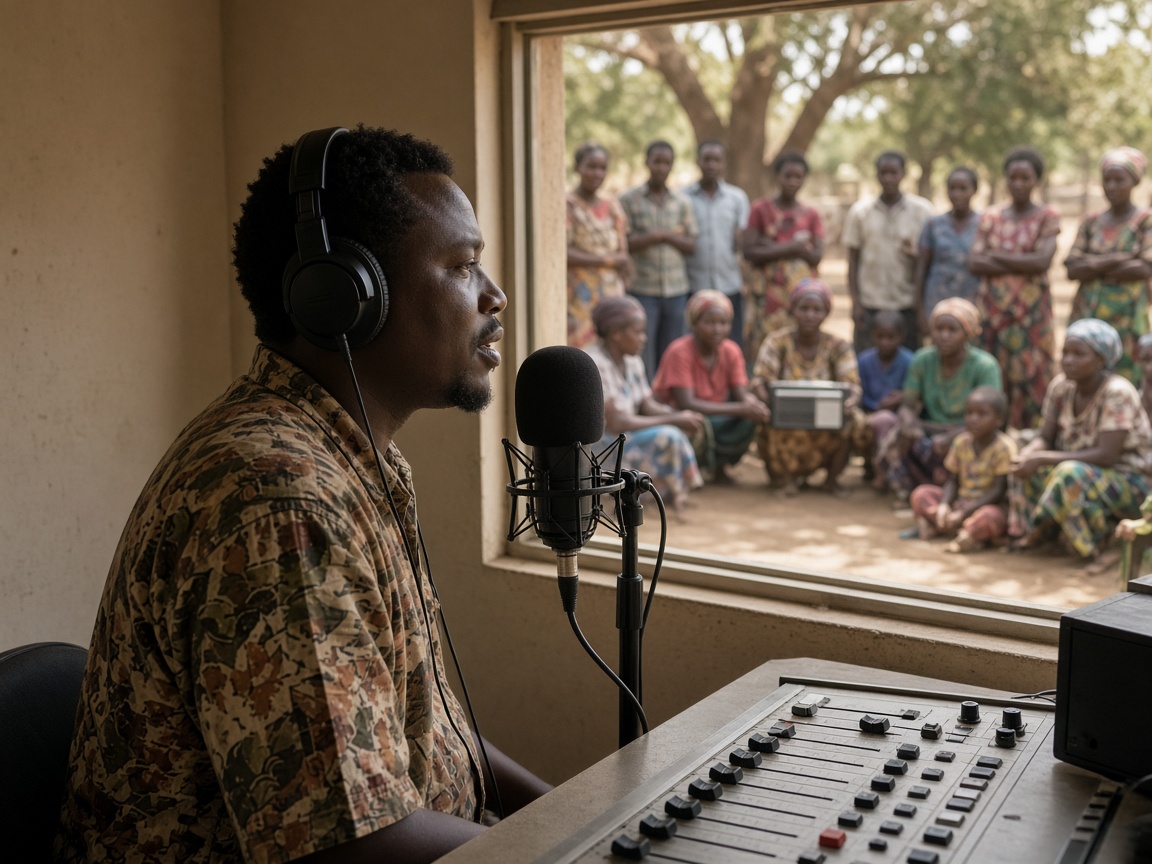
6. Trust-building with communities
People act on what they believe, and they believe people they trust. We work with local leaders, health workers and community voices so the message arrives through a face people know, not from a stranger.
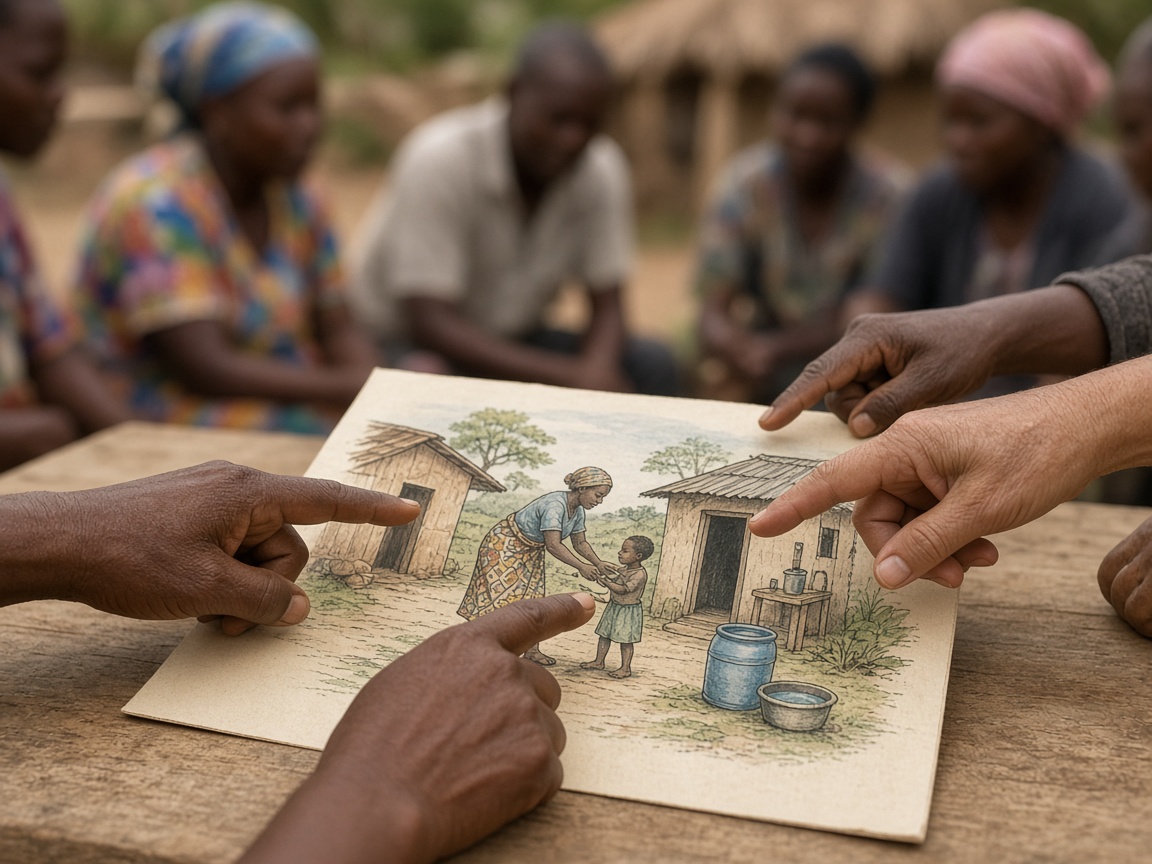
7. Turning data into stories people act on
Numbers inform decision makers, but stories move communities. We translate indicators and findings into human narratives that make the case clearly, so people can see themselves in the message and know what to do next.
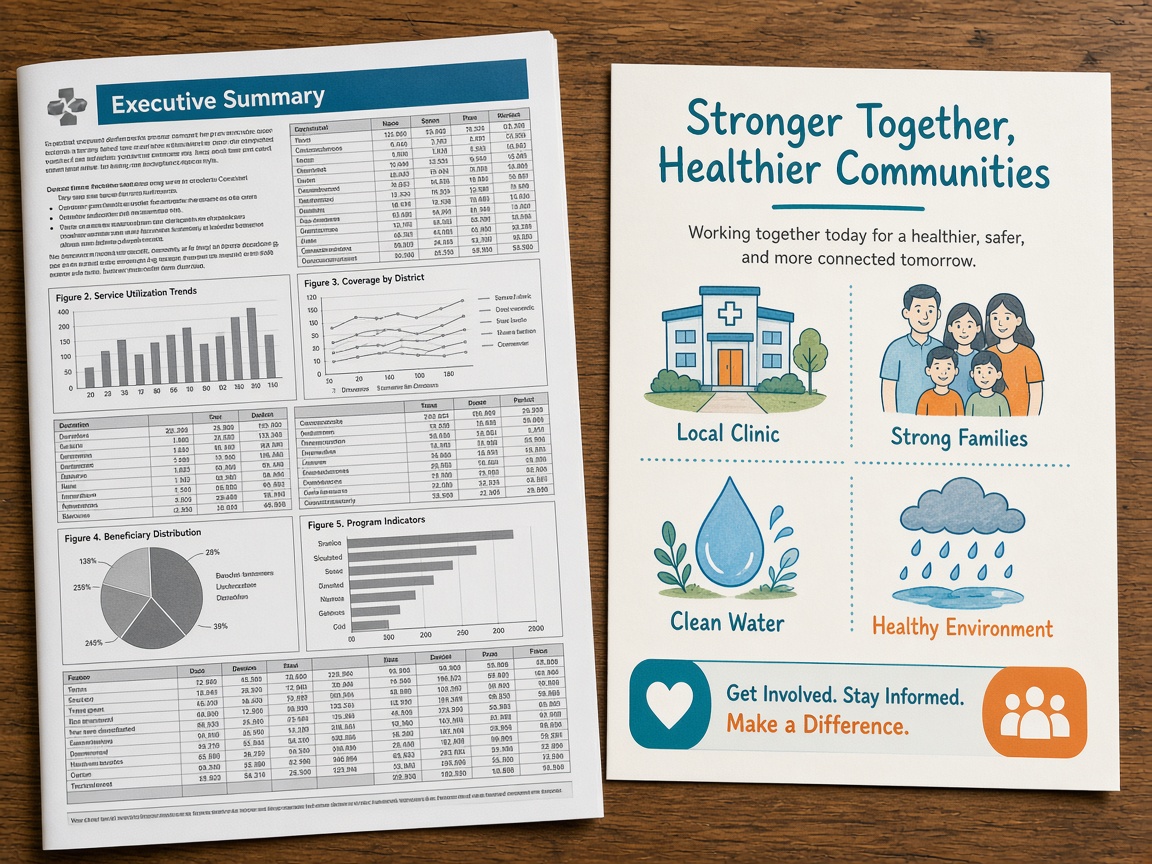
8. Monitoring and evaluation of communication outcomes
We measure what matters: reach, understanding, recall and behaviour change. Every campaign should teach the next one, and partners should be able to see what their investment achieved.
Communication is part of the work, not an add-on
Done well, communication is not something added to development work at the end. It is the part that decides whether the work is understood, trusted and used. When programmes are designed with the community’s understanding in mind from the start, the evidence reaches the people who need it, and impact follows.
How is your organisation making sure its message reaches the people it is meant for? If you are planning a health or development communication campaign, we would be glad to talk.
Mirage PR. Creativity meets strategy.
Note: all photographic-style images in this article are AI-generated illustrations and do not depict real people or events.
Recent Comments